
The War Scroll: A Comprehensive Overview
PDF versions of the War Scroll, detailing battles between the Sons of Light and Darkness, are freely available via PDFCOFFEE.COM and the Internet Archive.
Historical Context of the Dead Sea Scrolls
The Dead Sea Scrolls, discovered primarily between 1947 and 1956 in caves near Qumran, represent a pivotal archaeological find. These ancient manuscripts, including the War Scroll (1QM), offer invaluable insights into Jewish life and religious thought during the Second Temple period – roughly the 1st century BCE to the 1st century CE.
The scrolls were hidden during a time of significant political and religious upheaval, marked by Roman rule and internal Jewish conflicts. Accessing PDF versions allows researchers to study the historical backdrop against which the War Scroll was composed. The texts reflect the beliefs of a Jewish sect, often identified with the Essenes, who sought to preserve their traditions and await a coming apocalyptic conflict.
Discovery and Location of the War Scroll (1QM)
The War Scroll (1QM) was unearthed in Qumran Cave 1, one of the eleven caves where the Dead Sea Scrolls were discovered. Initial finds were made by Bedouin shepherds in 1947, sparking extensive archaeological excavations. The scroll itself, a lengthy parchment document, was meticulously pieced together from fragments found within the cave’s confines.
Today, digital reproductions, including PDF versions, allow global access to this significant text. The Israel Museum in Jerusalem houses the original fragments, while online platforms like the Internet Archive provide downloadable PDF copies for scholarly study and public engagement, preserving this historical treasure;
Dating the War Scroll: 1st Century BCE ౼ 1st Century CE
Paleographic analysis, alongside radiocarbon dating of the parchment, firmly places the War Scroll’s composition within the timeframe of the 1st century BCE to the 1st century CE. This period corresponds with significant socio-political upheaval in Judea, influencing the scroll’s apocalyptic themes. Accessing PDF versions of the scroll facilitates detailed examination of the ancient script.
Scholars utilize digital resources, like those available from the Israel Museum and platforms offering PDF downloads, to refine dating estimates. These digital copies allow for non-destructive study, aiding in understanding the historical context surrounding the scroll’s creation and its relevance to the era.

Content and Structure of the War Scroll
PDF versions reveal a detailed account of the conflict between the Sons of Light and Darkness, including battle plans and army organization.
The War of the Sons of Light Against the Sons of Darkness
PDF access to the War Scroll unveils its central narrative: a cosmic struggle between the righteous “Sons of Light” and the malevolent “Sons of Darkness.” This apocalyptic conflict, meticulously detailed within the scroll’s text, isn’t merely a physical battle, but a spiritual one, representing the ultimate triumph of good over evil.
The War Scroll outlines specific formations and strategies employed by the Sons of Light, preparing them for this final confrontation. Excerpts available in PDF format showcase the intense ideological divide fueling the war, portraying the Sons of Darkness as embodiments of corruption and wickedness. Studying the PDF reveals a complex system of beliefs underpinning this eschatological battle, central to the scroll’s theological significance.
Detailed Battle Plans and Tactics
The War Scroll, accessible in PDF format, provides remarkably detailed battle plans. These aren’t abstract strategies, but precise instructions concerning army formations, troop movements, and logistical arrangements. PDF versions reveal specific orders for deploying soldiers, utilizing weaponry, and coordinating attacks against the Sons of Darkness.
Tactics described include elaborate maneuvers and defensive positions, demonstrating a sophisticated understanding of warfare. The PDF documents showcase a highly organized military structure, with designated roles and responsibilities for each unit. Studying these plans offers insight into the Qumran community’s worldview and their anticipation of a final, decisive conflict, all meticulously preserved within the scroll’s PDF representation.
Organization of the Army of the Sons of Light
The War Scroll, readily available as a PDF download, meticulously details the hierarchical organization of the Sons of Light’s army. PDF analysis reveals a highly structured force, divided into units with specific functions and leadership. Priests play a crucial role, offering blessings and ensuring ritual purity before battle, as outlined in the PDF text.
The scroll’s PDF format showcases a system of commanders, standard-bearers, and various ranks, indicating a sophisticated military administration. Detailed lists specify the number of soldiers in each division, and their assigned duties. This organizational structure, preserved in the PDF, suggests a disciplined and prepared community anticipating a large-scale conflict, ready to execute their divine plan.
Weapons and Warfare Described in the Scroll
The War Scroll, accessible in PDF format, provides a fascinating glimpse into ancient weaponry and battle tactics. While not detailing advanced technology, the PDF reveals preparations for prolonged warfare, including the manufacture of arrows, shields, and other defensive gear. The scroll’s PDF version outlines specific formations and maneuvers for engaging the enemy, the Sons of Darkness.
Detailed within the PDF are instructions for creating protective equipment and deploying troops. The text emphasizes the importance of coordinated attacks and maintaining formation. Though lacking detailed descriptions of specific weapon types, the PDF clearly illustrates a strategic approach to combat, focusing on discipline and divine favor as key elements for victory in the impending apocalyptic battle.

Theological and Ideological Significance
PDF analysis reveals a stark dualism: the Sons of Light versus the Sons of Darkness, reflecting apocalyptic beliefs detailed within the scroll’s accessible PDF.
Dualistic Worldview: Sons of Light vs. Sons of Darkness
PDF versions of the War Scroll vividly portray a cosmic struggle between the “Sons of Light” and the “Sons of Darkness,” a central tenet of the scroll’s ideology. This fundamental dualism permeates the entire text, dictating the purpose and execution of the described warfare; Accessible PDF documents showcase how this conflict isn’t merely physical, but a spiritual battle for ultimate dominion.
The Sons of Light, representing the righteous community, are destined to triumph over the forces of evil embodied by the Sons of Darkness. Detailed battle plans within the PDF reveal a meticulously organized campaign designed to enact this divine victory. Studying the scroll’s PDF format allows researchers to analyze the ideological underpinnings of this worldview, highlighting its apocalyptic nature and the community’s self-perception as agents of God’s will.
Apocalyptic Themes and Eschatology
The War Scroll, readily available in PDF format, is steeped in apocalyptic themes and eschatological beliefs. These PDF documents reveal a vision of a final, decisive battle heralding the end of the current age and the establishment of a new, righteous order. The scroll details a cosmic war, not simply a historical conflict, but a preordained event leading to ultimate redemption.
Analyzing the War Scroll’s PDF reveals a strong emphasis on divine intervention and the imminent arrival of God’s kingdom. The detailed battle plans aren’t merely tactical; they are part of a larger, divinely orchestrated plan. Accessing the scroll through PDF resources allows scholars to explore the community’s fervent expectation of a cataclysmic event and their role in bringing about its fulfillment.
The Role of Angels in the Warfare
Examining the War Scroll in PDF format reveals a significant role assigned to angelic beings within the described conflict. The PDF versions detail how angels aren’t merely observers, but active participants in the war between the Sons of Light and the Sons of Darkness, bolstering the righteous army. Specific angels are designated to lead forces and execute divine judgments.

These PDF documents demonstrate a belief that the earthly battle mirrors a celestial one, with angelic hosts mirroring the human armies. The scroll outlines rituals and blessings intended to invoke angelic assistance, highlighting the community’s reliance on supernatural aid. Accessing the scroll’s PDF allows for a deeper understanding of this complex interplay between the divine and the mortal realms during the eschatological war.
Rituals and Blessings Before Battle
The War Scroll, accessible in PDF format, meticulously details elaborate rituals and blessings preceding engagement with the Sons of Darkness. These PDF versions reveal a highly structured system designed to purify and prepare the army spiritually and physically for conflict. Specific blessings are recited, invoking divine protection and ensuring victory.
Analyzing the PDF reveals that these aren’t simply prayers, but formalized procedures involving specific sequences and pronouncements. The scroll emphasizes communal participation, fostering unity and reinforcing the belief in their righteous cause. Studying the PDF provides insight into the community’s worldview, where warfare was deeply intertwined with religious observance and divine mandate, ensuring success.

Scholarly Interpretations and Analysis
PDF analyses by scholars like Florentino García Martínez explore the War Scroll, linking it to Corinthian texts and even Cold War parallels for context.
Florentino García Martínez’s Contributions
Florentino García Martínez significantly advanced understanding of the War Scroll, making key contributions to its interpretation and analysis. His work, often accessible in PDF format through academic databases and publications, delves into the scroll’s complex military strategies and theological underpinnings. Martínez’s research connects the War Scroll to broader contexts within the Dead Sea Scrolls corpus and related literature, including explorations of apocalyptic thought.
He meticulously examined the scroll’s detailed battle plans, offering insights into the organization of the Sons of Light’s army and the envisioned warfare. His publications, stemming from the Speakers Lectures at Oxford University, provide comprehensive overviews, readily available for scholarly research and study in PDF form. Martínez’s work remains foundational for anyone engaging with this fascinating document.
Connections to Corinthian Texts and Paul’s Struggles
Scholarly analysis, often found in accessible PDF documents, reveals intriguing connections between the War Scroll and Paul’s struggles detailed in his Corinthian letters. Specifically, the apocalyptic backdrop of Paul’s conflict with opponents in 2 Corinthians 10:36 echoes the dualistic worldview presented in the scroll – the battle between the Sons of Light and Darkness.
The War Scroll’s emphasis on spiritual warfare provides a framework for understanding Paul’s depiction of his ministry as a fight against unseen forces. Examining these parallels, often available as downloadable PDF research papers, illuminates the shared cultural and religious context influencing both texts, offering deeper insights into early Christian thought.
The War Scroll and the United Nations/Cold War Parallels (Comparative Analysis)
Comparative analyses, readily available as downloadable PDF reports, draw striking parallels between the meticulously organized warfare described in the War Scroll and 20th-century geopolitical structures. The scroll’s detailed battle plans and rigid army organization resonate with the strategic planning of the Cold War era and the subsequent formation of the United Nations.
Researchers, documented in accessible PDF literature, suggest the scroll’s vision of a final, decisive conflict mirrors the anxieties surrounding global conflict during the Cold War. The scroll’s emphasis on a clear division between opposing forces finds echoes in the ideological divide that defined that period, offering a unique historical perspective.
Physical Characteristics of the Scroll
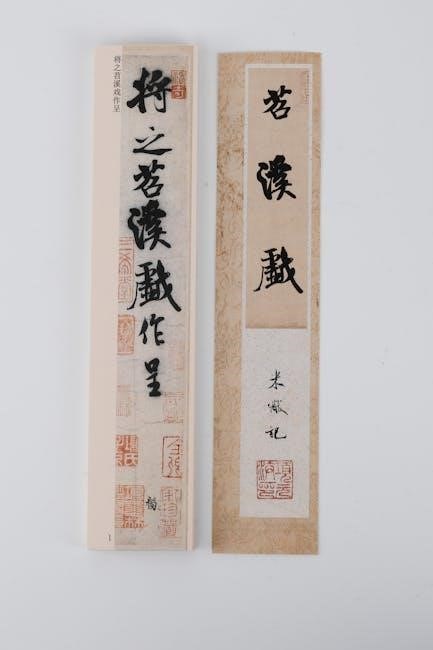
PDF scans reveal the War Scroll is written on parchment, measuring 15-16cm in height and 279cm in length, originating from Qumran Cave 1.
Material: Parchment
PDF representations of the War Scroll clearly demonstrate its composition – meticulously inscribed upon parchment. This ancient writing material, derived from animal skin, provided a durable surface for the complex text detailing the apocalyptic conflict. Digital access, through resources like the Israel Museum’s digital collection and the Internet Archive, allows close examination of the parchment’s texture and condition.
The quality of the parchment suggests significant resources were dedicated to its creation, reflecting the importance of the scroll’s contents to its authors. PDF downloads enable researchers to study the physical medium alongside the textual information, offering insights into scribal practices and material culture of the time. The parchment’s preservation, despite centuries of burial, is remarkable.
Dimensions: Height and Length (15-16cm x 279cm)
PDF versions of the War Scroll allow for a virtual appreciation of its impressive scale. Measuring between 15-16 centimeters in height and extending to a remarkable 279 centimeters in length, the scroll represents a substantial undertaking. Digital reproductions, available from the Israel Museum and platforms like PDFCOFFEE.COM, convey a sense of its physical presence.
These dimensions highlight the extensive planning and resources required for its creation. Examining the PDF files, one can visualize the sheer amount of parchment used and the considerable time invested in its production. The scroll’s length necessitated a complex layout and careful organization of the detailed battle plans and theological concepts it contains.
Provenance: Qumran Cave 1
The War Scroll’s origin in Qumran Cave 1 is crucial to understanding its context. PDF versions accessible through the Israel Museum’s digital collection and sites like the Internet Archive, allow researchers to virtually connect with its place of discovery. Found amongst the Dead Sea Scrolls, its preservation within the cave protected it for centuries.
The cave’s arid environment contributed to the scroll’s survival, enabling modern scholars to study its contents via digitized PDF formats. Knowing its provenance informs interpretations of the text, linking it to the Essene community believed to have inhabited Qumran. Accessing the PDF allows exploration of this historical connection.

Accessing and Studying the War Scroll
PDF versions of the War Scroll are readily available for download and research from resources like PDFCOFFEE.COM and the Internet Archive.
Digital Dead Sea Scrolls at the Israel Museum
The Israel Museum in Jerusalem provides digital access to the War Scroll (1QM), allowing detailed examination online. This invaluable resource showcases the scroll’s physical state, originating from Qumran Cave 1, and dates it to the 1st century BCE ─ 1st century CE.
Researchers can virtually explore this parchment scroll, measuring 15-16cm in height and 279cm in length. Furthermore, downloadable PDF versions, accessible through resources like PDFCOFFEE.COM and the Internet Archive, complement the digital viewing experience. These resources facilitate in-depth study of the scroll’s content, detailing the epic conflict between the Sons of Light and the Sons of Darkness.
Online Resources for Download and Research (PDFCOFFEE.COM, Internet Archive)
Several online platforms offer convenient access to the War Scroll in PDF format for research purposes. PDFCOFFEE.COM hosts a version detailing war and peace within the Dead Sea Scrolls and related literature, including insights from Florentino García Martínez.
The Internet Archive also provides a downloadable copy, cataloging it as “The scroll of the War of the Sons of Light against the Sons of Darkness.” These resources are invaluable for scholars and enthusiasts alike, enabling detailed study of the scroll’s battle plans, tactics, and theological significance, offering excerpts from this pivotal text.
Bibliographical References and Further Reading
For in-depth study, consider resources stemming from the 2009 Oxford University Speakers Lectures, published as “The Dead Sea scrolls and the Bible.” This work, including contributions on apocalyptic backgrounds, provides crucial context.
Further exploration can be found in “Holy War in Corinth,” analyzing Paul’s struggles through an apocalyptic lens. Additionally, “Visions of War and Tales of Peace in the Dead Sea Scrolls” by Florentino García Martínez offers valuable insights. Accessing the War Scroll in PDF format, alongside these texts, facilitates comprehensive research into its historical and theological implications.
The Speakers Lectures at Oxford University (2009)
Six chapters of “The Dead Sea scrolls and the Bible” originated as the Speakers Lectures delivered at Oxford University in May 2009. These lectures, now published, delve into the scrolls’ complexities, offering foundational understanding.
Researchers seeking a PDF version of analyses related to the War Scroll will find these lectures invaluable. They provide essential background for interpreting the scroll’s content, particularly its depictions of conflict and ideology. The published volume includes comprehensive bibliographical references, aiding further investigation into this significant Dead Sea Scroll.
Influence and Related Literature
PDF resources explore connections between the War Scroll, Paul’s writings, and historical conflicts like Austria-Hungary’s war, revealing broader apocalyptic themes.
Holy War in Corinth: Apocalyptic Background
PDF documents, stemming from the Oxford University Speakers Lectures of 2009, illuminate the War Scroll’s influence on understanding Paul’s struggles in 2 Corinthians. Specifically, research details how the apocalyptic worldview presented in the scroll—the cosmic battle between the Sons of Light and Darkness—provides crucial context for interpreting Paul’s confrontations with opponents.

The War Scroll’s detailed descriptions of spiritual warfare and its emphasis on a coming eschatological conflict resonate with Paul’s language of spiritual weaponry (“weapons of righteousness”) and his portrayal of his adversaries as agents of darkness. Accessing these analyses, often available as PDF downloads, reveals a deeper understanding of the first-century Jewish apocalyptic milieu that shaped both the War Scroll and Paul’s theological framework.
Visions of War and Tales of Peace in the Dead Sea Scrolls
Florentino García Martínez’s work, accessible in various PDF formats, explores the complex interplay between warfare and peaceful aspirations within the Dead Sea Scrolls, particularly focusing on the War Scroll. This scroll, detailing elaborate battle plans, exists alongside texts advocating communal living and spiritual purity, presenting a nuanced picture of first-century Jewish thought.
Analyzing the War Scroll as a PDF document reveals how the Qumran community envisioned a final, decisive conflict. However, it’s crucial to remember that this vision coexisted with a longing for a peaceful, righteous society. Studying these contrasting themes, readily available through online resources, provides a comprehensive understanding of the scrolls’ multifaceted message.
Austria-Hungary and the War (Historical Contextualization)
While seemingly distant, referencing Austria-Hungary in relation to the War Scroll – accessible as a PDF – highlights the pervasive atmosphere of conflict in the ancient world. The Austro-Hungarian Consulate-General’s historical records, though from a much later period, demonstrate the enduring presence of geopolitical tensions and military preparedness.
The War Scroll’s detailed battle strategies reflect a society acutely aware of warfare, mirroring the constant power struggles of empires like Austria-Hungary. Examining the scroll as a PDF alongside historical documentation of early 20th-century Europe reveals a shared human preoccupation with defense, offense, and the organization of armed forces, despite vast temporal differences.

Current Research and Ongoing Debates
PDF analyses of the War Scroll continue, focusing on interpreting battle formations and assessing the historical accuracy of its detailed descriptions of ancient warfare.
Interpretations of Specific Battle Formations
PDF versions of the War Scroll are crucial for detailed study of its complex battle formations. Scholars meticulously analyze these plans, available for download from resources like the Internet Archive and PDFCOFFEE.COM, attempting to decipher their practical application. Current research debates the feasibility of the described formations, considering logistical challenges and ancient warfare limitations.
Interpretations vary, with some suggesting symbolic rather than literal implementation. The scroll’s precise instructions regarding troop positioning and maneuvers continue to fuel discussion. Accessing the War Scroll in PDF format allows researchers worldwide to contribute to these ongoing debates, fostering a deeper understanding of its military strategies and potential historical context. The digital accessibility is paramount for collaborative analysis.
The Historical Accuracy of the Scroll’s Descriptions
Assessing the historical accuracy of the War Scroll’s depictions relies heavily on accessible PDF versions, readily available through platforms like PDFCOFFEE.COM and the Internet Archive. Scholars debate whether the detailed battle plans reflect genuine military practices of the 1st century BCE-CE, or represent an idealized, eschatological vision.
The scroll’s descriptions of weaponry and tactics are compared to archaeological evidence and contemporary historical accounts. While some elements align with known practices, others appear highly stylized or symbolic. Examining the scroll in PDF format facilitates close textual analysis, aiding in identifying potential exaggerations or theological influences. Determining the scroll’s grounding in reality remains a central challenge for researchers.